Why Is My Dog Shaking? Causes, Red Flags & When to Call the Vet
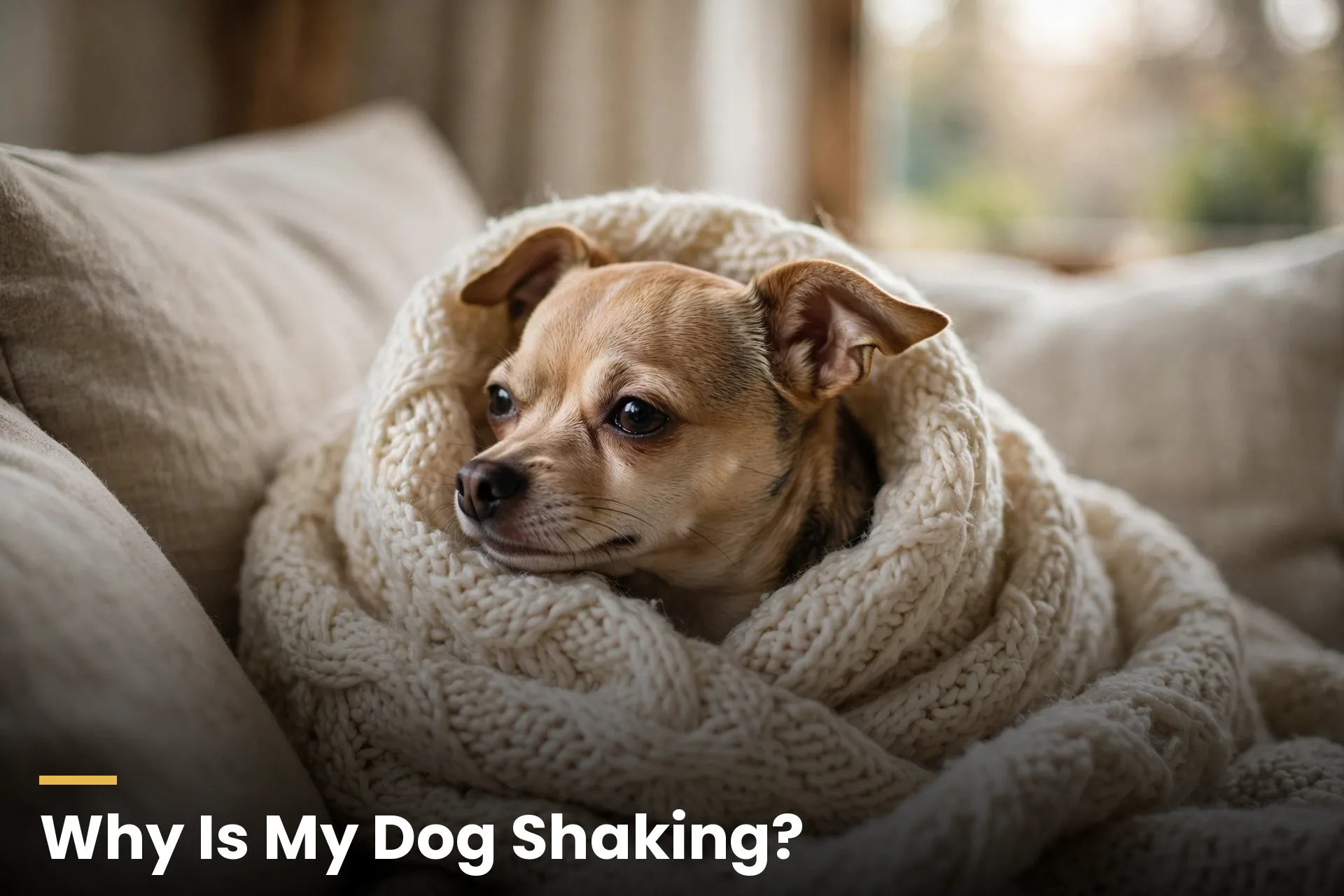
Why is my dog shaking? Most of the time, the answer is simple. Your dog shakes because it feels cold, wet, scared, or excited, and the shaking stops when the trigger passes.
But shaking can also warn you about pain, low blood sugar, poisoning, or a seizure. This guide explains what shaking means, how to tell a harmless shake from a dangerous one, and when to call your vet. What does it mean when my dog is shaking?
It means something triggered the shaking, from cold or excitement to pain or illness.
Key Takeaways — Short Answer
Trembling vs Shivering vs Tremors — First, Learn the Difference
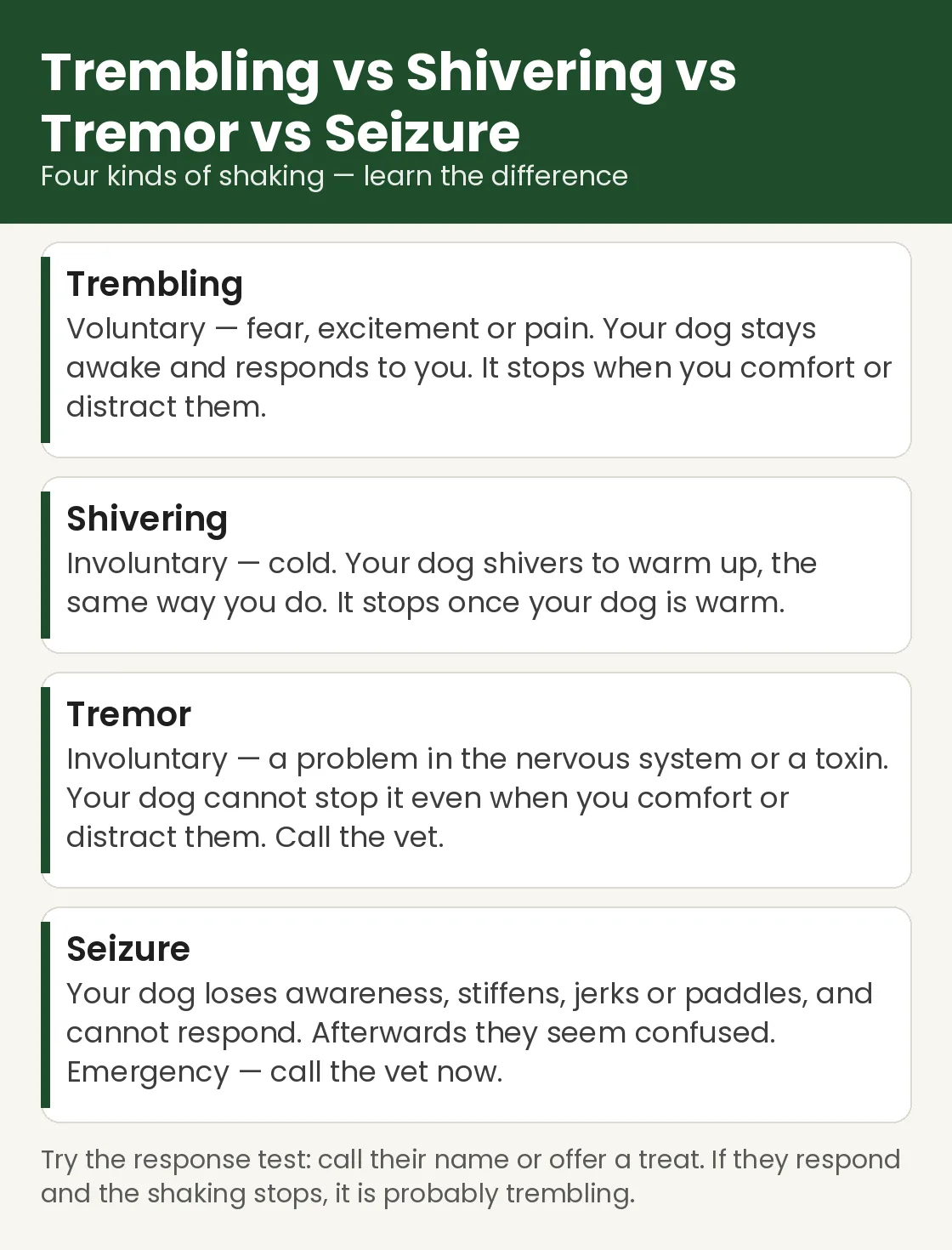
Trembling, shivering, tremor or seizure — four kinds of shaking, four different meanings.
Shaking in dogs takes three forms. Trembling is a voluntary, behavioral response to fear, excitement, or pain. Shivering is involuntary, and cold causes it. Your dog shivers to warm up, the same way you do. Muscle tremors are also involuntary, but a problem in the nervous system or a toxin causes them.
Try one simple test. Call your dog’s name, offer a toy, or offer a treat. If your dog responds and the shaking stops, the shaking is probably voluntary trembling.
If your dog cannot stop shaking even when you comfort or distract it, call your vet. Why is my dog shaking for no reason? There is almost always a reason, even if you cannot see it. Check for cold, fear, pain, or illness.
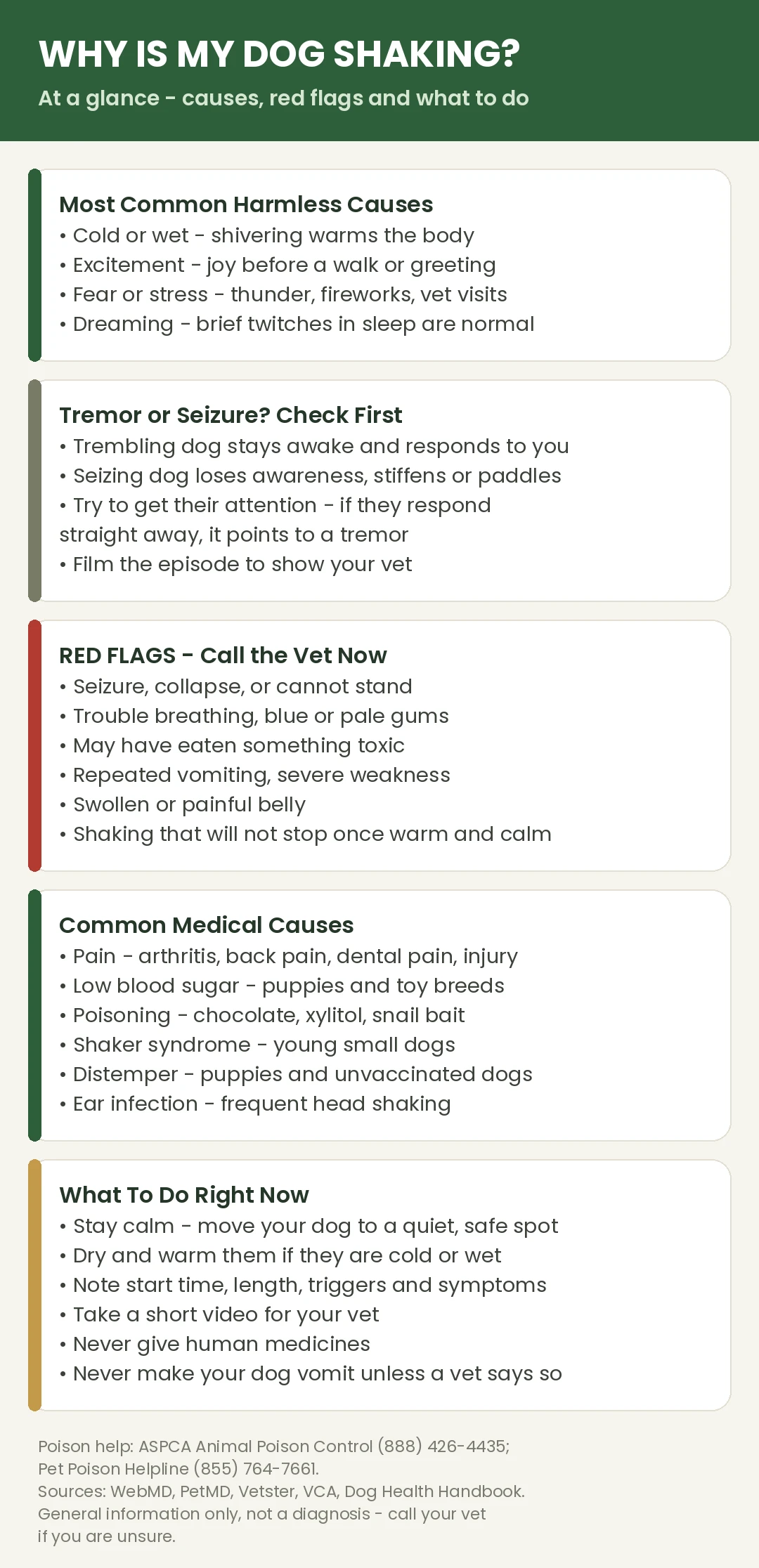
Harmless Reasons Dogs Shake — Cold, Wet, Excitement
Not all shaking means trouble. This section covers the harmless reasons your dog may tremble, including cold, water, excitement, and dreaming, so you can recognize normal behavior. If shaking continues or comes with other signs, call your vet.
Cold
Cold is the most common harmless cause. Small breeds, thin-coated dogs, puppies, and seniors lose heat fastest, so they shiver more. If your dog stops shaking once it warms up, cold was the cause.
Can cold weather cause my dog to shake? Yes. It is a natural warming response, and smaller or short-coated breeds feel it most.
Why is my dog shaking but not cold? Anxiety, excitement, pain, nausea, low blood sugar, or a medical issue are the most common non-temperature reasons.
Water
Water causes the same kind of shake. Dogs shake their whole body after a bath or a swim to throw water off their coat.
Excitement
Excitement makes many dogs shake too. Your dog may tremble when you come home, pick up the leash, or open the treat jar. Why does my dog shake when excited?
It releases pent-up energy and shows big, happy feelings. Some dogs even lose a little bladder control when they shake with joy. That is normal excitement, not illness.
Dreaming
Dreaming is another harmless cause. Dogs twitch, paddle their legs, and shake lightly during REM sleep. A dreaming dog wakes easily when you call its name.
Can dogs shake from nightmares? Dogs do dream, and light twitching in sleep is normal. Worry only if the sleeping dog goes stiff, cannot wake up, or seems confused after waking. That pattern points to a seizure, not a dream.
Fear, Anxiety, and Stress
Fear and anxiety cause shaking in many dogs. Thunderstorms, fireworks, vet visits, car rides, strangers, and being left alone can all trigger trembling. A frightened dog often pants, paces, hides, tucks its tail, or pulls its ears back.
Yawning and lip licking are early stress signs too. Why is my dog shaking and yawning? Yawning is a stress signal, not tiredness.
Stress-related shaking usually covers the whole body and stops when the stressful event ends. Why is my dog shaking and acting scared? Fear is the most likely cause, especially after a loud noise or a stranger.
A safe space helps a lot. Train your dog to link its bed, mat, or crate with good things like treats and rest. Your vet can suggest a ThunderShirt, calming supplements, or medication for severe anxiety.
Bored Panda, the only source that mentions it, says some clever dogs learn that shaking brings extra love and attention. Treat it as a rare possibility. Rule out fear, pain, and illness first.
Pain — The Most Under-Recognized Cause
Pain is probably the most under-recognized cause of shaking. Dogs in pain tremble, hold themselves stiffly, and often stop eating before anything obvious shows.
Common pain sources include arthritis, back problems, sprains, strains, bruising, bone or joint damage, ear infections, skin infections, dental disease, surgery recovery, urinary tract infections, severe stomach upset, and cancer. A dog that suddenly cannot walk normally needs a vet right away.
Watch for the other signs of pain: limping, whining, crying, yelping, guarding a body part, refusing to move, or snapping when you touch a sore spot. Why is my dog shaking and whining, yelping, or crying? Pain is the most likely answer, especially when you pick your dog up.
Why is my dog shaking and not moving? Pain, weakness, or fear can freeze a dog in place. Do dogs shake when they are in pain?
Yes. Shaking is one of the clearest pain signals dogs show. Why is my dog shaking and growling? Growling can mean pain too, especially when you touch your dog.
Why is my dog shaking when he breathes in? Call your vet. Why is my dog shaking when I pet him? That can mean pain when touched, nervousness, or cold. If it starts suddenly, get a vet check.
Why is my dog shaking while lying down?
A dog that shakes while lying down may be dreaming, cold, anxious, or in pain. If the shaking stops when your dog wakes or warms up, it is usually harmless. Shaking that continues while your dog is awake and resting can point to pain or illness.
Watch for panting, whining, stiffness, or refusal to move. Call your vet if the shaking keeps returning or comes with any of these signs.
Nausea and Motion Sickness
Nausea makes dogs shake. Dogs feel sick from motion sickness, medication, eating too much, or eating the wrong thing, such as a toxic plant. Kidney or liver disease can also cause nausea.
A nauseous dog may drool, smack its lips, swallow again and again, hide, or vomit. Why is my dog shaking and drooling? Drooling plus shaking often means nausea.
Why is my dog shaking and gagging? Gagging points toward nausea or something stuck in the throat. If your dog keeps gagging, call your vet.
Why is my dog shaking in the car? Motion sickness and travel anxiety overlap there. A dog that drools and vomits on rides most likely feels carsick. A dog that shakes but never vomits may fear the ride itself. Talk to your vet about both.
Shaking and Panting Together
Shaking with panting narrows the list. Fear and pain cause it most often. Heat and overheating cause it too.
Poisoning, low blood sugar, and Cushing’s disease can also cause it. Why is my dog shaking and panting? Panting and shaking after exercise usually mean your dog is cooling down.
Panting and shaking during a thunderstorm point to fear. Panting and shaking at rest, with no clear trigger, deserve a vet call the same day.
Heatstroke is the dangerous version of this pair. A dog that pants heavily, drools, and shakes after heat or hard exercise may overheat. Move your dog somewhere cool and pour cool, not cold, water over its head, belly, armpits, and feet.
Do not cover your dog with wet towels and do not use ice. Go to a vet straight away. Bright red or dry gums, vomiting, weakness, confusion, seizures, or collapse with heavy panting all mean emergency care now.
Why is my dog shaking and breathing heavy? It can mean fear, pain, heat, low blood sugar, or a seizure problem. If it does not settle within a few minutes, call your vet.
Shaking and Vomiting, Not Eating, or Lethargy
Why is my dog shaking and vomiting or throwing up? This pair is a warning sign. Toxins, Addison’s disease, liver or kidney disease, and distemper can all cause it.
Go to emergency vet care if the vomiting keeps coming, or if your dog also collapses, has pale gums, or cannot stand. What should I do if my dog is shaking and throwing up? Call your vet or an emergency vet right away.
The same applies to shaking with vomiting and diarrhea together, or with throwing up bile, yellow foam, white foam, or blood. Blood in vomit is always an emergency.
Why is my dog shaking and not eating? A dog that shakes and refuses food may feel pain, nausea, or fear, or it may be seriously ill. The same goes for shaking and not eating or drinking, and shaking and refusing treats.
Why is my dog shaking and lethargic? Lethargy means low energy, slow movement, or just lying around. Shaking with lethargy can mean pain, illness, low blood sugar, or poisoning.
A dog that shakes while laying down and will not get up needs a vet promptly. Why is my dog shaking and has diarrhea? It can mean poisoning, infection, or a stomach problem. Call your vet promptly.
Why is my dog shaking and drinking a lot of water? Tell your vet how much your dog drinks. Why is my dog shaking and following me around or making weird noises? It often means anxiety, pain, or confusion.
Why is my dog shaking at night or in the middle of the night? Night shaking can mean anxiety, pain that worsens at rest, or a dream. If your dog shakes at night and acts weird, check whether it can walk, eat, and respond to you.
Why is my dog shaking in the morning? It can mean cold overnight, low blood sugar after a long gap without food, or stiffness and pain on waking.
Poisoning and Toxins — Emergency
Poisoning is one of the most serious causes of shaking, and it needs fast action.
Chocolate, xylitol (the sweetener in sugar-free gum, candy, some peanut butters, and toothpaste), grapes and raisins, onions, garlic, macadamia nuts, alcohol, marijuana and cannabis edibles, human medications, household cleaning products, garden fertilisers, and plants such as azalea, tulip, sago palm, foxglove, and oleander can all cause tremors.
Snail and slug bait with metaldehyde causes severe muscle tremors and convulsions. Moldy food and compost can carry tremor-causing toxins.
Poisoning signs include tremors, weakness, disorientation, depression, drooling, nausea, vomiting, diarrhea, and seizures. Bored Panda adds strychnine, plant toxins, acetylcholinesterase inhibitors or pesticides, ethylene glycol (antifreeze), methylxanthines, and illicit drugs to the toxin list. Can moldy food make a dog shake?
Yes. Mold on food waste, compost, dairy, walnuts, or peanuts can produce tremorgenic mycotoxins. Small amounts cause fine tremors. Larger amounts cause seizures.
Onset windows vary by toxin. Xylitol often acts within 10 to 60 minutes, and chocolate usually takes 6 to 12 hours. Moldy food or compost usually acts within 1 to 2 hours, and snail bait takes 30 minutes to 6 hours.
Cannabis edibles usually act within 1 to 2 hours, or up to 4 on an empty stomach.
Treat these windows as rough guides. If you think your dog ate anything toxic, call your vet or a poison line right away, even with no signs yet. Treatment works best when it starts before signs appear.
Low Blood Sugar (Hypoglycemia)
Low blood sugar can make a dog shake, tremble, or even have a seizure. It most often affects young and small-breed dogs. Toy-breed puppies that miss meals are at high risk because their small bodies store little energy.
Diabetic dogs given too much medication can also drop too low. Dogs that eat xylitol can develop low blood sugar too. Can low blood sugar make a dog shake?
Yes, and it can turn dangerous quickly. Signs include weakness, trembling, confusion, and seizures. This is an emergency. Call your vet right away.
Advice on the home step varies, so keep it simple: call your vet first. Give honey, jam (not the sugar-free type), or corn syrup on your dog’s tongue or gums only if your vet tells you to, and only if your dog is conscious. Never pour liquid into the mouth of a weak dog.
Seizures and Neurological Conditions
Seizures can frighten any owner, but knowing what to look for helps you act calmly. This section covers what a seizure looks like, what to do during one, and related conditions such as tremors and distemper. Call your vet after any seizure.
What a seizure looks like
Seizures look like shaking, but they are different and more serious. During a generalized seizure, a dog usually loses consciousness, falls to its side, stiffens, jerks, paddles its legs, and drools. Afterward, the dog often seems confused.
Focal seizures can be subtler and harder to spot. Is my dog shaking or having a seizure? Use the responsiveness test. A trembling dog stays awake and responds to you.
A seizing dog cannot respond, and afterward it seems confused. Why is my dog shaking like a seizure? If the shaking looks like a seizure, with loss of awareness, stiffening, or paddling, treat it as one and call your vet.
Can a dog have a seizure without shaking? Yes. Focal seizures can happen with little visible shaking.
If your dog stares blankly, twitches in one spot, or acts strange and then seems confused, tell your vet.
What to do during a seizure
If your dog has a seizure, stay calm. Do not try to restrain your dog and do not put your hands near its mouth. Dogs do not swallow their tongues.
Gently move your dog away from furniture, stairs, or sharp objects. Time the episode if you can and film it if you can do so safely. Call your vet at once if it lasts more than a few minutes or repeats.
Take your dog to an emergency vet if the seizure lasts more than 2 to 5 minutes, or if your dog has several seizures without a break. Seizures usually last 1 to 2 minutes, so a seizure past 5 minutes is an emergency. Call your vet sooner rather than later if you are unsure.
Treatment for seizure disorders includes medications such as Keppra, phenobarbital, or potassium bromide. Your vet picks the medication. Never start or stop a seizure medication on your own.
Generalized tremor syndrome
Generalized tremor syndrome, also called shaker syndrome, steroid-responsive tremor syndrome, or white shaker dog syndrome, causes sudden whole-body tremors. It was first noticed in small white dogs such as Maltese and West Highland White Terriers, but it can affect any dog.
Symptoms usually start between 9 months and 2 years, with onset most often at 1 to 2 years. Corticosteroid treatment, usually prednisone, often shows results within a week, and tremors usually improve within 1 to 2 weeks.
A study of 75 dogs cited by Dog Health Handbook found crossbreeds most common, median age 17 months, and about 1 in 5 dogs relapsed. The outlook is usually excellent, though some dogs relapse or need long-term medication. The tremors get worse with excitement and ease with rest.
Distemper and other causes
Distemper is a viral disease that most often affects puppies and adolescent dogs that have not been fully vaccinated. What are the signs of distemper in dogs?
Eye and nose discharge, fever, coughing, loss of appetite, vomiting, diarrhea, lack of energy, trembling and convulsions, head tilt, drooling, walking in circles, and clumsiness. Distemper can be fatal, so a dog with these signs needs a vet right away.
Other neurological causes include cerebellar disease, hepatic encephalopathy, inflammatory brain diseases, and demyelinating disorders. These need a vet diagnosis.
Head Shaking and Back-Leg Shaking
Shaking can point to different body areas, and each has its own likely causes. This section covers head shaking, head tremors, and back-leg shaking, with clues that help you decide whether to call your vet.
Head shaking
Why is my dog shaking his head? The most common cause is an ear problem. Ear infections, ear mites, foreign bodies such as grass seeds, and allergies that inflame the ear canal all make dogs shake their heads.
Look for redness, odor, discharge, scratching, or pain around the ears. How do I stop my dog shaking his head? Check the ears, but do not put drops or cleaners in them unless your vet tells you to.
Frequent head shaking needs a vet exam. Can an ear infection make my dog shake? Yes.
Ear infections often cause head shaking, ear scratching, redness, odor, or discharge.
Head tremors
Head tremors are a separate thing. Idiopathic head tremor syndrome, sometimes called head bobbing, appears in three patterns: a rotational bobble-head movement, an up-and-down nod, or a side-to-side shake. Episodes typically run one to three minutes and stop abruptly, with no disorientation afterward.
In one study, distraction stopped the tremor in 87 percent of cases. Bulldogs accounted for roughly 37 percent of reported cases and Doberman Pinschers around 8 percent. Around 88 percent of affected dogs had their first episode before four years old. These figures come from one study, so treat them as interesting, not settled.
Affected dogs do not go on to develop other neurological problems. Still, get a vet visit the first time, because a partial seizure can look very similar.
Back-leg shaking
Why is my dog shaking back legs? Senior dogs often develop hind-leg tremors from muscle weakness. These tremors usually do not affect how the dog walks. But do not assume old age. Pain and illness can cause the same sign, so have your vet check a senior dog with new tremors.
Age and Breed — Puppy, Young Adult, Senior, Small Dogs
Age changes the likely answer. Why is my puppy shaking? Puppies can shake from cold, excitement, or fear, but low blood sugar comes first.
Puppies have very little reserve and can drop after a missed meal, a long play session, or a cold night. Trembling with wobbliness or dullness in a puppy is a same-day vet call. A puppy that shakes uncontrollably needs emergency care.
In young adults, shaker syndrome and toxin exposure sit near the top of the list, because young dogs raid bins and compost. In middle age, pain becomes the most common under-recognized cause, alongside Addison’s disease, which classically appears in young to middle-aged dogs and is easy to miss. Addison’s disease is an underactive adrenal gland.
It can cause shaking, weakness, vomiting, and diarrhea. An Addisonian crisis is an emergency. In seniors, hind-limb tremor at rest is common, but pain and kidney decline both rise sharply in this group.
Why is my senior dog shaking? Age-related muscle weakness, arthritis pain, or neurological changes are frequent causes, whether your dog is 10 or 14 years old.
Never settle on “just old age” before a vet has checked.
Is it normal for small dogs to shake a lot? Yes, many small and thin-coated breeds tremble more easily because of their size and metabolism. Chihuahuas and Italian Greyhounds are the breeds sources name most often.
What breeds are more prone to shaking disorders? Small white breeds such as Maltese, West Highland White Terriers, and Bichon Frises are most linked to generalized tremor syndrome.
Bernese Mountain Dogs, Chow Chows, and English Springer Spaniels are also prone to shaking with age. Kidney disease can also cause tremors when toxins build up in the blood as the kidneys fail. Why is my dog shaking with kidney disease or kidney failure?
Advanced kidney failure can lead to tremors, and it needs vet care.
Cushing’s disease, in which the body makes too much cortisol, can also cause panting and shaking, mostly in older dogs.
Why does my dog shake on and off?
Shaking that comes and goes often has a trigger, such as cold, fear, excitement, or pain when your dog moves. Note when it happens, how long it lasts, and what your dog was doing. A short pattern like this helps your vet find the cause.
Film an episode on your phone. Book a vet visit if the episodes grow longer, happen more often, or come with changes in appetite, energy, or behavior.
Shaking After Surgery, Vaccines, Spay/Neuter, or Giving Birth
Why is my dog shaking after surgery or anesthesia? Shaking after surgery can come from pain, cold as the anesthesia wears off, or nausea. Why is my dog shaking after vaccines or shots?
Mild shaking and lethargy can follow a vaccine, and usually pass within a day or two; call your vet if they last longer. The same gap covers shaking after spay or neuter, after giving birth, and during labor.
Is it normal for my dog to shake after surgery, vaccines, giving birth, or during labor? Call your vet if the shaking lasts more than a few hours, gets worse, or comes with vomiting, weakness, refusal to eat, or a swollen or painful belly. Why is my dog shaking after eating?
Note what your dog ate and when the shaking started, and tell your vet.
Red Flags — When Shaking Is an Emergency
Go to an emergency vet now if your dog has a seizure, collapses, cannot stand, or becomes unresponsive; has trouble breathing, blue or pale gums, or severe weakness; or may have eaten a toxin.
Go now if the shaking comes with repeated vomiting, severe diarrhea, a swollen or painful belly, or signs of severe pain. Treat it as an emergency if the shaking lasts several minutes, keeps coming back, or comes with stumbling, inability to stand, or marked confusion. Should I be worried if my dog is shaking?
Worry if the shaking is new, unexplained, keeps happening, or comes with other signs. Is shaking in dogs an emergency? Sometimes.
Mild shaking with a clear cause that stops quickly is usually not. When should I take my dog to the vet for shaking? The same day if the shaking is new, unexplained, or keeps coming back, and at once if any red flag shows.
Why is my dog shaking and acting weird all of a sudden?
Sudden shaking with odd behavior can mean pain, fear, poisoning, low blood sugar, or a seizure. If you think your dog ate something toxic, or it collapses, overheats, or has a seizure, go to an emergency vet now. Why is my dog shaking but acting normal?
Cold, excitement, stress, or old age can cause brief shaking in a dog that otherwise acts fine. Still, new or repeated shaking deserves a vet mention, because pain often shows up this way first. Why is my dog shaking uncontrollably?
Uncontrollable, violent, or non-stop shaking is urgent. Call your vet or an emergency vet right away.
Why is my dog shaking all of a sudden?
Sudden shaking can come from fear, cold, pain, nausea, or a toxin. If your dog was fine a moment ago and now trembles hard, look for a clear cause such as thunder or a chilly floor. If you see none, treat it as urgent and call your vet.
Call at once if your dog may have eaten something harmful, collapses, vomits, or seems confused. Bring any packaging with you.
What to Do Right Now — At Home Steps
Stay calm and look at the full picture. Move your dog to a quiet, safe area away from stairs, water, and anything it could fall against. If your dog is cold or wet, dry it off and offer gentle warmth with a blanket.
Do not use intense heat. Watch for vomiting, diarrhea, trouble walking, confusion, collapse, head tilt, abnormal eye movements, or difficulty breathing. Check the ears if your dog shakes its head. Redness, odor, discharge, or pain are reasons to call your vet.
Record a short video if you can do so safely, and note when it started, how long it lasted, and anything else you noticed. That video and those notes help your vet more than a description alone. Do not give human medicines.
Do not force food or water. Do not try to make your dog vomit unless a veterinarian specifically tells you to. What should I do if my dog is shaking?
Follow these steps, then call your vet if the cause is not obvious or the shaking does not stop.
What should I do if my dog is shaking uncontrollably? Call your vet or an emergency vet right away.
How to Calm a Trembling Dog and Stop the Shaking
How can I calm a trembling dog? Offer a quiet, safe space and stay calm yourself. Do not punish fear.
Pet and cuddle your dog, or try gentle massage strokes from the neck downward. Distract your dog with toys, treats, and games. Many dogs soothe themselves by chewing and licking.
Keep a predictable daily routine, because routine builds confidence. For cold shaking, a blanket or a sweater stops the shivering.
How do I stop my dog from shaking? Find the trigger first. Warm a cold dog, calm a scared dog, and let an excited dog settle.
How do I stop my dog from shaking from anxiety, fear, fireworks, or thunder? Move your dog to a quiet room, turn on the television or music, and offer a cosy spot or an anxiety vest. Ask your vet about prescription medication for extreme fears.
Never give your dog a calming supplement or medication without asking your vet first. Can red light therapy help a dog that is shaking?
MedcoVet sells the device, so treat this as a single commercial source, not a recommendation.
What Your Vet Will Do — Diagnosis and Treatment
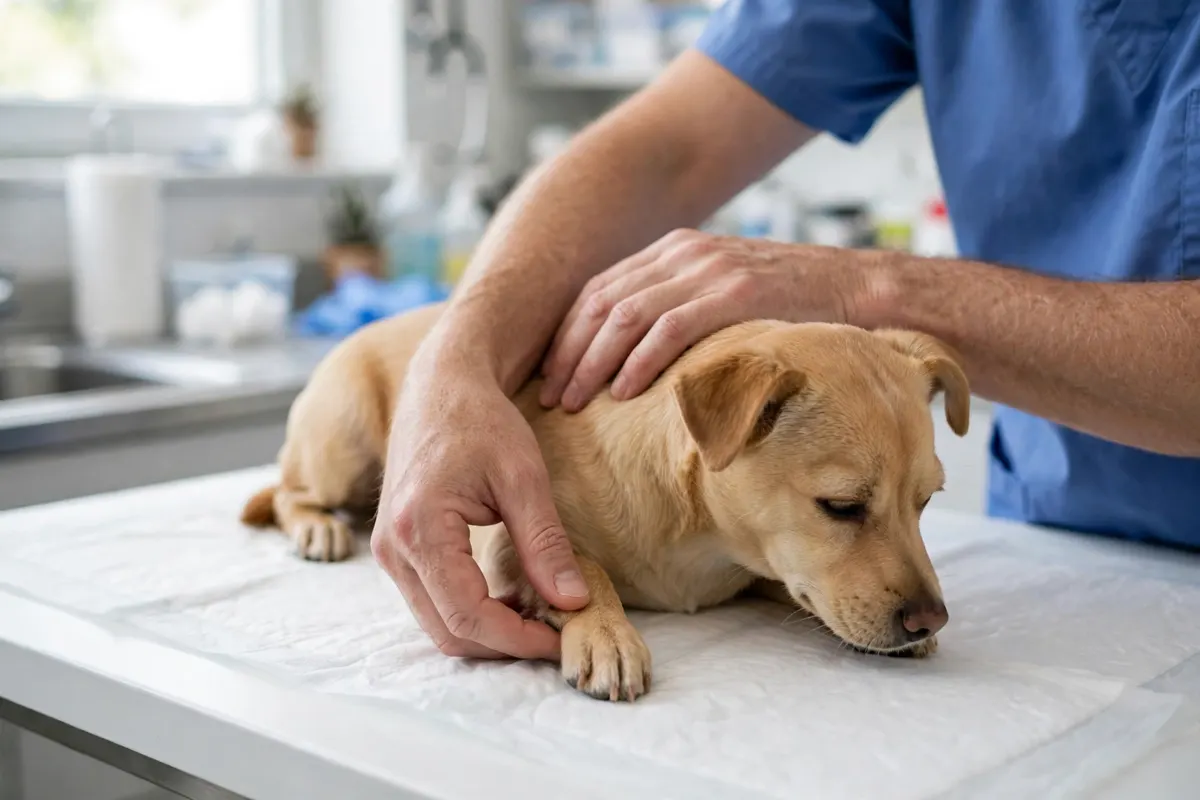
If the shaking will not stop, or your dog cannot respond to you, call your vet.
Your vet starts with a physical exam, looking for pain sources you cannot see: spine, abdomen, hips, and mouth. Blood glucose often comes first because it is fast and time-critical if low. A chemistry panel and electrolytes check kidney values, liver enzymes, calcium, and potassium.
A neurological exam follows if the tremor is focal, or if your dog shows weakness, head tilt, or a change in gait.
Your vet will ask about access to bins, compost, garages, and other people’s medication. Imaging or referral comes only if the earlier steps point somewhere, or if the tremor keeps worsening.
Treatment depends on the diagnosis: pain relief, anticonvulsant medication, hormone or blood sugar management, or antidotes plus supportive care for poisoning. Your vet picks the treatment and the dose.
If every test comes back normal and your dog is otherwise well, that is a real result, not a failure. Many tremor syndromes are diagnoses of exclusion. How long do dog tremors last?
Bored Panda, the only source that answers, says anywhere from a few minutes to hours. That range is vague, so do not use it as a rule. Do dogs shiver when they’re sick? Yes. Fever, nausea, and pain can all cause shivering.