Why Do Dogs Eat Grass? 10 Reasons, the Vomit Myth, and When to Call the Vet

Why do dogs eat grass? Most dogs eat grass because it is normal behavior, not because something is wrong. Researchers have not found one single proven reason. Different dogs graze for different reasons. This guide gives you the 10 reasons vets list most often, the numbers from the biggest study on the topic, the real risks hiding on lawns, and the exact signs that mean a vet visit.
Key Takeaways — Short Answer
How Common Is Grass Eating? What the Research Found
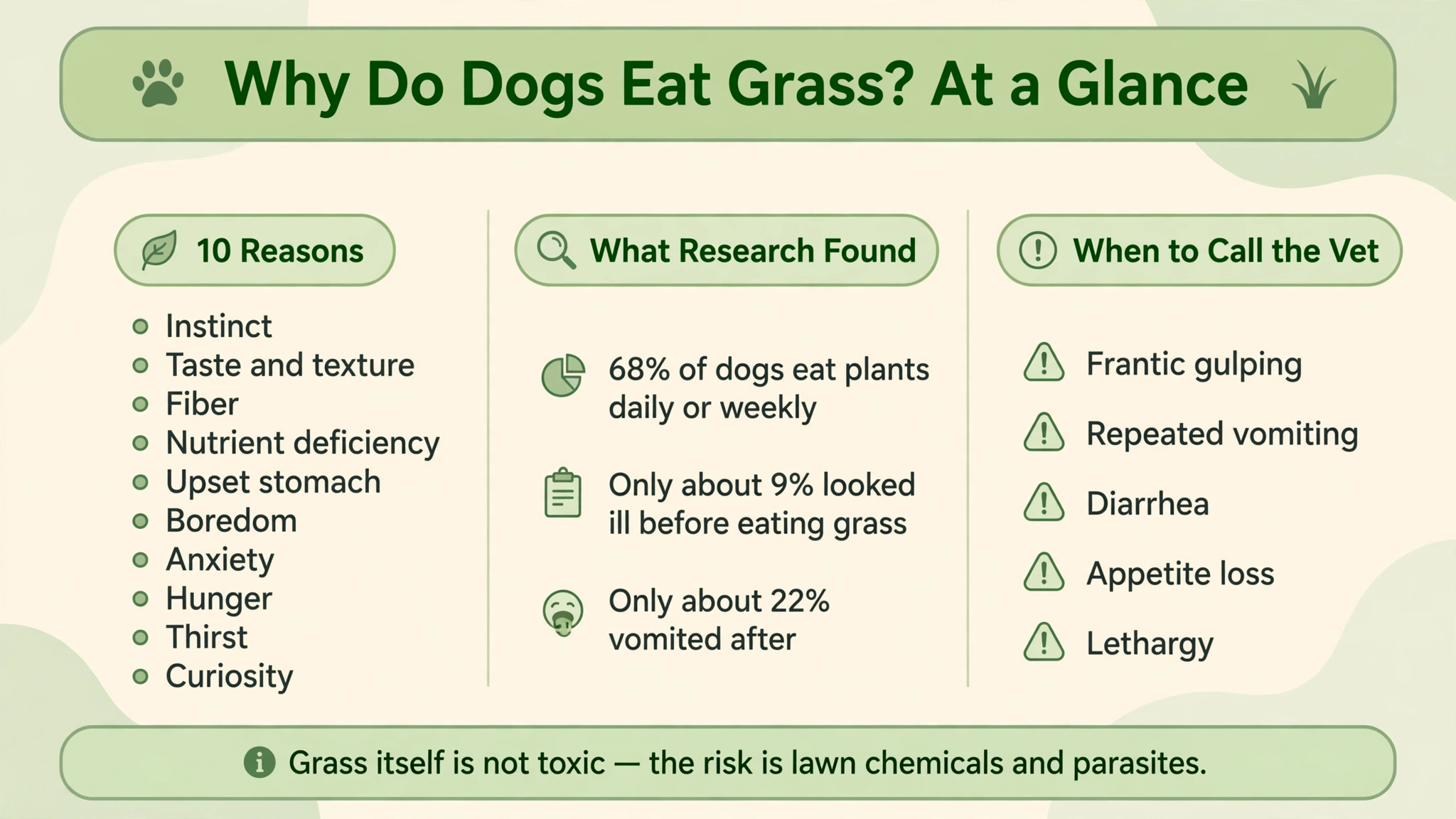
Grass eating is one of the most common dog behaviors. In the largest survey on the topic, run by researchers at the University of California, Davis School of Veterinary Medicine — Dr. Karen Sueda, Dr. Kelly Hart, and Dr. Benjamin Hart — and published in 2008, about 68% of owners said their dogs ate plants daily or weekly. Grass was the plant dogs ate most often. Canine Bible reports grass as the most frequently eaten plant for 79% of dogs.
One figure conflicts with the 68% number. Cooper’s Dog Treats puts the share at around 80% of dogs eating grass at least occasionally. Treat these as different measures, not one fact: 68% covers daily or weekly plant eating, while 80% covers ever eating grass.
The habit shows up in puppies and adults alike, with no link to breed, sex, or diet type. A dog on a complete, balanced diet still grazes.
The 10 Reasons Dogs Eat Grass
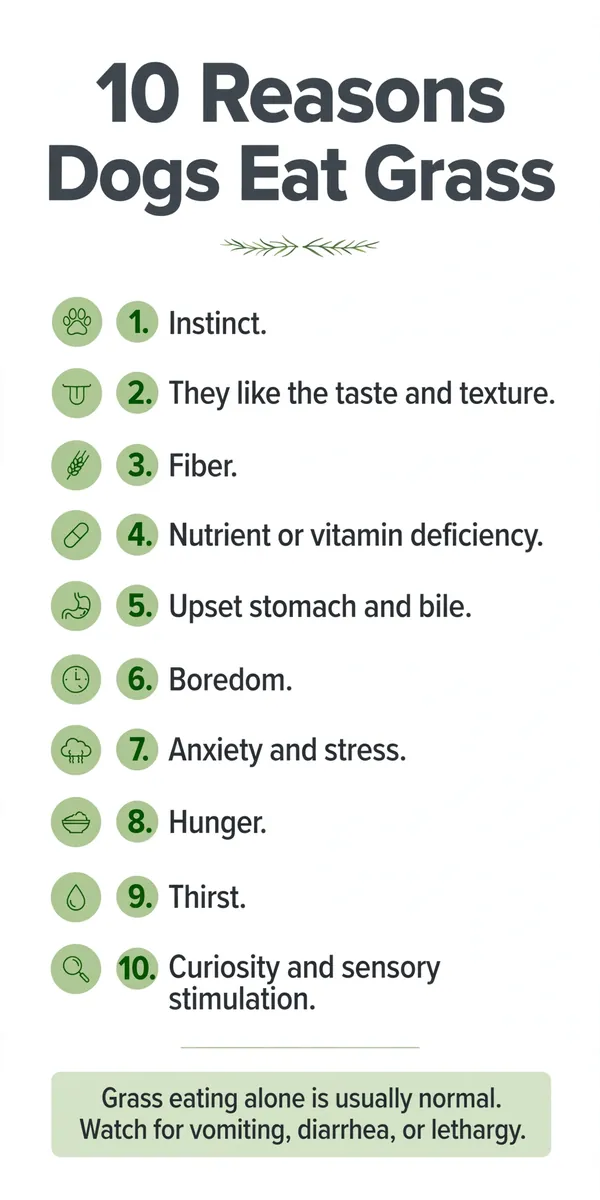
1. Instinct
Dogs descend from wild canids that ate whole prey, including the plant matter inside the prey’s stomach. VCA Animal Hospitals notes that stool samples show 11%–47% of wolves eat grass. PetMD, cited by Furrology and Dear Sitter, puts plant material at 2%–10% of wolf stomach contents. These are different measures, so do not merge them. The AKC puts it plainly: grazing may be part of what dogs are built to do, not a sign that something is missing.
2. They Like the Taste and Texture
Some dogs simply enjoy fresh grass. Tender spring grass tastes sweet and mild, feels cool and moist, and smells fresh. Dr. Katy Nelson, a senior veterinarian at Chewy, says dogs may find grass palatable and want to add roughage to their diet. The AKC agrees: dogs enjoy fragrant, wet grass in their mouths, especially when new grass emerges in spring.
3. Fiber
Dogs need fiber to digest food and pass stool regularly. VCA calls grass a good source of roughage and warns that a lack of fiber affects digestion and stool. The Vet Desk calls dogs “facultative carnivores” — meat eaters that also use plants. Dear Sitter cites a PetMD case: an 11-year-old Miniature Poodle ate grass and plants, then threw up, for seven years. The habit stopped once the dog switched to a high-fiber diet.
4. Nutrient or Vitamin Deficiency
Eating non-food items has a medical name: pica. Vetnique explains that pica can signal a gap in minerals, nutrients, or vitamins. Reader’s Digest and VCA push back on this theory for most dogs: a dog on a high-quality, well-balanced diet should not run short of nutrients, so deficiency is an unlikely reason for everyday grazing. Deficiency stays possible, but it is not the likely cause for a well-fed dog.
5. Upset Stomach and Bile
An empty stomach lets bile build up, and bile irritates the stomach lining. Dr. Jerry Klein, AKC Chief Veterinary Officer, explains that dogs may eat grass to release the bile and feel better. The AKC tells the story of a young dog that frantically gobbled grass first thing in the morning, then threw up yellow foam. Hill’s Pet describes the same pattern: dogs that eat grass to vomit swallow it fast, barely chewing, and the long unchewed blades tickle the throat. Vetnique adds that stress, or oily, spicy, or fatty human food, can leave a dog’s stomach overly acidic, and grass may help neutralize the acid.
6. Boredom
A dog left alone in the yard with nothing to do will find something to do. VCA says nibbling grass fills the hours, and notes that grass eating rises as owner contact time falls. The AKC agrees: most dogs would rather have your company, and a dog hanging in the yard alone may eat grass because it is bored.
7. Anxiety and Stress
Anxious dogs eat grass as a comfort mechanism, much like nervous people chew their fingernails. VCA makes that comparison directly. The Vet Desk links separation anxiety to pica. Vetnique says anxiety can upset a dog’s stomach, and grass eating may calm it. If the habit spikes when you leave the house, anxiety is a likely driver.
8. Hunger
Grass can work as an appetizer. GoodRx notes that dogs eat less grass after meals, and Dear Sitter cites a 2007 study with the same result: dogs ate more grass before meals, less after meals, and less later in the day. A hungry dog waiting for its next meal may graze to fill the gap. Check the feeding schedule before you assume a medical cause.
9. Thirst
Grass holds a lot of water. Reader’s Digest points out that dogs grazing early in the morning or late in the evening may chase the dew on the blades. The AKC adds a practical fix: always keep a bowl of fresh, cool water outside so thirst never drives the habit.
10. Curiosity and Sensory Stimulation
Puppies learn about the world by tasting it, and grass is one of the first things they taste. The Vet Desk lists learning from the environment as its first reason. A 2010 study found dogs more likely to eat grass during moments of relaxation or idleness. The smell, feel, and taste of grass give a dog sensory input — for many dogs, that is reason enough.
Do Dogs Eat Grass to Make Themselves Vomit? The Myth and the Facts
This is the idea most owners have heard, but the evidence does not support it as the main reason. The UC Davis 2008 survey found only about 9% of dogs appeared ill before eating grass, and only about 22% vomited afterward. VCA reports the same range in different words: less than 25% vomit after eating grass, and only 10% show signs of illness beforehand. Furrology rounds it to about 8% often ill before and about 22% regularly vomiting after, and the Royal Kennel Club survey found fewer than 1 in 10 ill before and about a quarter regularly sick afterward. The wording differs, but the range agrees — present it as a range, never as one exact figure.
VCA names the core puzzle: the chicken-or-egg dilemma. Does a dog eat grass to vomit and soothe an upset stomach, or does it develop a stomachache and vomit because it ate grass? Nobody has settled that question. Hill’s splits grass eating into two types. Grazing means happy munching with no ill effects. Instinctive vomiting means fast, barely chewed gulping meant to trigger vomiting. The two look different, and the difference matters. A relaxed nibble that ends with a calm dog points to grazing. Frantic gulping followed by vomiting points to an upset stomach.
Can grass make a dog vomit? Yes, sometimes — grass can irritate the stomach lining, and eating a lot at once can make even a healthy dog throw up. But most grass eaters do not vomit, so vomiting is not the habit’s purpose for most dogs.
Is Eating Grass Bad for Dogs? Is It Safe?
Grass itself is not toxic to dogs. For most dogs, relaxed grazing is safe and normal. Furrology states it plainly: most dogs eat grass because it is normal grazing behavior, not because they are ill. Petcro agrees — in the vast majority of cases, grass eating is normal, harmless behavior, not a sign of illness.
Use this quick checklist. Grazing is probably normal when your dog nibbles calmly, keeps eating its regular food, passes normal stool, stays bright and active, and shows no other symptoms. The habit becomes a problem when it turns frantic, constant, or compulsive, when it replaces meals, or when it comes with vomiting, diarrhea, or low energy. Dear Sitter offers the same split as a normal-versus-call-the-vet table, drawn from the AKC, the Royal Kennel Club, VCA, PetMD, Hill’s, and Preventive Vet.
Should you stop a dog from eating grass? Hill’s says the occasional graze is no cause for concern, and GoodRx agrees. Stop the habit only when the grass is unsafe or the pattern turns worrying.
The Real Risks Are Not the Grass Itself
Lawn Chemicals
Pesticides, herbicides, weed killers, and fertilizers can poison a dog. Keep your dog off any lawn you did not treat yourself, because you cannot tell what a neighbor or a park crew sprayed. Cooper’s Dog Treats gives the only time window any source offers: many products take 24–48 hours after application before they are safe for pets, and some take longer. That figure comes from one source only.
If your dog eats grass you suspect was treated, act fast. Take the dog away from the area. Do not wait for symptoms. Call your vet or go to a veterinary emergency hospital. GoodRx gives the same advice. Bring the product label if you have it.
Parasites
Droppings left on grass carry parasite eggs. When a dog eats contaminated grass, it can pick up intestinal parasites such as hookworms. GoodRx, Daily Paws, Reader’s Digest, and Vetnique all warn about this. The warning signs are diarrhea, weight loss, lethargy, and worms in the stool — ask your vet about fecal parasite testing if those signs appear.
Here the sources conflict. The Vet Desk and Vetnique say grass eating may help dogs expel intestinal parasites, and note that wolves seemingly use grass this way. Other sources say grass gives dogs parasites. Do not present either as settled fact.
Toxic Plants Near the Grass
The risk is not only the grass. Cooper’s Dog Treats warns that a dog eating unknown non-grass plants it cannot identify is a problem, because many garden plants are toxic. Petcro makes the same point: the real risks are what sits on or near the grass. If your dog grazes in a new yard, check what else grows there first.
Why Puppies Eat Grass
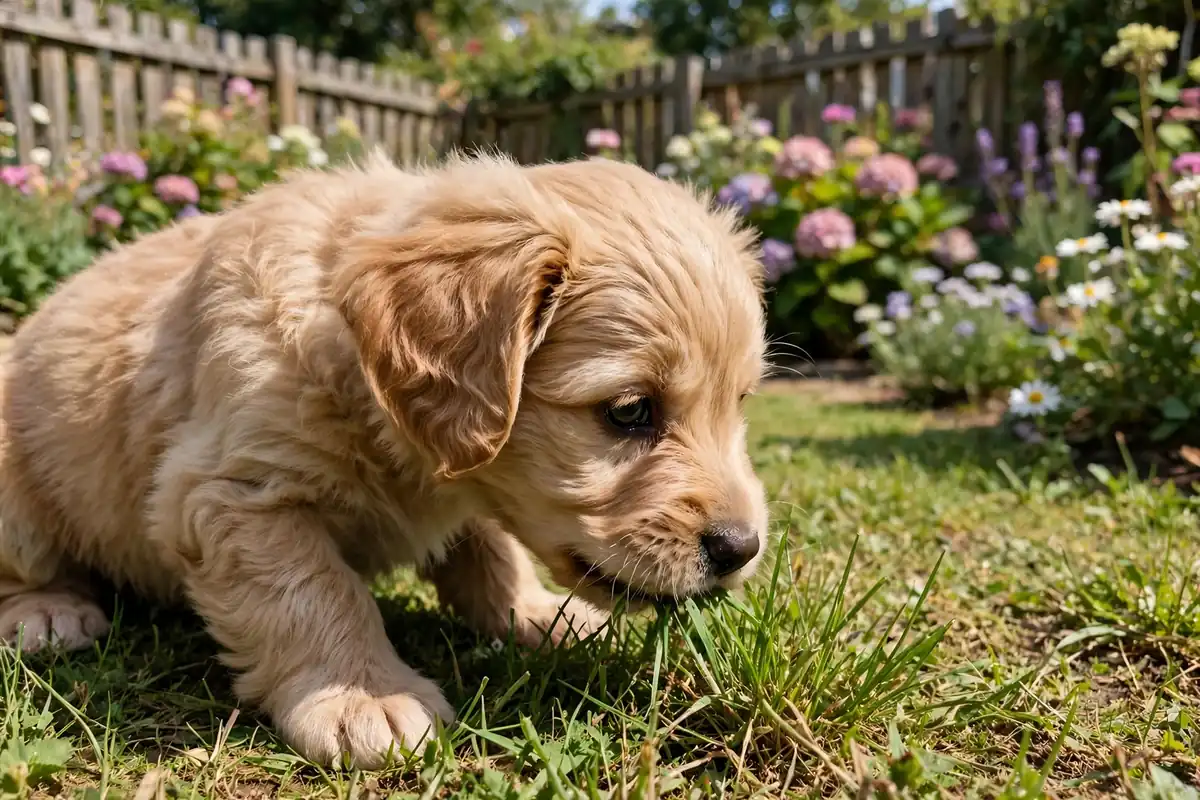
Puppies often eat grass out of curiosity — it is usually normal.
Puppies eat grass for all the same reasons adult dogs do, plus a few of their own. A young puppy explores almost everything by putting it in its mouth, so grass is a natural target for a curious, teething mouth. Petcro describes it that way. The Vet Desk lists learning from the environment as the first reason puppies graze. Canine Bible adds that puppies often learn the habit from their mothers. GoodRx notes the same pattern: like young children, puppies put everything in their mouths, including grass, flowers, and dirt.
Puppy grazing is usually normal. Step in when the puppy eats grass frantically, eats dirt, leaves, sticks, or mud along with it, or vomits afterward. Redirect with a chew toy, supervise yard time, and keep the puppy on untreated grass.
Why Does My Dog Eat Grass Every Day, Every Morning, or at Night?
Daily grazing is common. The UC Davis figures show about 68% of dogs eat plants daily or weekly, so a dog that grazes every day sits inside the normal range. Daily grazing alone is not a reason to worry. Ask instead how the dog grazes: calm nibbling points to habit or taste, while frantic gulping points to stomach trouble.
Morning grazing has two common drivers. Dew makes morning grass cool, wet, and tasty, as Reader’s Digest notes. An empty stomach also lets bile build up overnight, and the AKC’s bile explanation fits the dog that gobbles grass first thing in the morning and then throws up yellow foam.
Night grazing worries owners most, especially a dog eating grass frantically in the middle of the night.
Frantic middle-of-the-night grazing usually means the dog feels nauseous or restless and cannot settle. If it happens once and the dog seems fine after vomiting, whatever bothered the dog has probably passed. If it repeats, call your vet instead of searching for home remedies.
Constant, excessive, or obsessive grazing is different from daily grazing. GoodRx says excessive eating plus other illness signs should prompt a vet visit. Canine Bible cites the ASPCA: as long as the grass is untreated and the behavior is not obsessive or paired with vomiting or other symptoms, there is usually no need to intervene.
Grass Eating With Other Symptoms
Owners search for grass eating paired with specific symptoms. Each combination points in a different direction.
Grass and vomiting, or throwing up yellow foam or yellow bile. The most searched combination. Yellow foam or bile usually means an empty stomach, per the AKC. A single vomit followed by a fine dog is usually not an emergency. Repeated vomiting is a vet visit.
Grass and diarrhea, yellow poop, or blood in stool. Vetnique links grass eating with diarrhea, weight loss, lethargy, and worms in stool to intestinal parasites. Blood in stool always deserves a same-day vet call.
Grass and coughing, gagging, drooling, or dry heaving. These point to throat irritation from unchewed blades, or to nausea. The AKC’s bile explanation fits here too: dogs that gulp grass fast barely chew it, and long blades tickle the throat. If coughing or gagging repeats, or the dog struggles to swallow, call your vet.
Grass and licking everything, licking paws, or lip licking. A nauseous dog may lick, swallow, gulp, eat grass, or look restless, notes The Canine Dietitian. Licking plus grass eating points toward nausea, reflux, or an unsettled gut — it is a clue, not a diagnosis.
Grass and stomach gurgling or loud stomach noises. Gurgling means gas and gut movement, and GoodRx lists excess gas as one reason dogs eat grass. Occasional gurgling with calm grazing is usually harmless; gurgling with vomiting or diarrhea is a vet visit.
Grass and drinking a lot of water. Thirst can drive grazing, since grass holds water. But drinking far more than usual can also signal illness. If the extra drinking is new and the grass eating is new too, call your vet.
Grass and not eating food. Cooper’s Dog Treats lists eating grass to the exclusion of regular food as a problem sign. If the dog refuses food for a full day, call your vet.
When to Worry — Red Flags and When to Call the Vet
Call your vet if any of these appear: grass eating that starts suddenly after never happening before; frantic, non-stop gulping; repeated vomiting; diarrhea; weight loss; loss of appetite; lethargy; worms in the stool; blood in the stool; or eating grass instead of food. Furrology lists the same set: frantic gulping, repeated vomiting, diarrhoea, weight loss, loss of appetite, or lethargy alongside grass eating.
Your vet may run fecal or blood tests to check for parasites or toxins, as the AKC notes. Vetnique adds the conditions a vet should rule out when grass eating persists despite diet changes: intestinal worms, gastric reflux, pancreatitis, and inflammatory bowel disease.
Compulsive eating of non-food items has its own name: pica — compulsively eating rocks, dirt, fabric, paper, or cloth. Hill’s says compulsive foreign-object eating deserves a pica check, and the AKC agrees that extreme grass eating may lead your vet to mention pica. Occasional grazing is not pica. Constant, driven eating of non-food items is.
How to Stop Your Dog From Eating Grass
Start with the reason, not the grass. Match the fix to the trigger.
Boredom. Give the dog more exercise and mental work. VCA suggests a food-containing puzzle toy that challenges the dog. A tired, busy dog grazes less.
Anxiety. Comfort helps. VCA suggests a new toy or an old T-shirt carrying your scent for anxious dogs. Spend more time with the dog, and do not leave it alone in the yard for long stretches.
Hunger. Check the feeding schedule. Dogs eat less grass after meals, so a meal timed before yard time can cut grazing.
Diet. A high-fiber food may help if the dog seeks roughage — a Miniature Poodle’s seven-year grass habit stopped on a high-fiber diet. Ask your vet before you switch foods.
Attention-seeking. Dogs learn fast. Dear Sitter cites PetMD: dogs can learn that eating grass gets a reaction from you. Stay calm, redirect quietly, and reward the dog for leaving the grass alone.
Puppies. Redirect with a chew toy and supervise yard time. Teach a “leave it” cue on walks so the puppy learns to pass grass by.
Unsafe grass. This fix is not optional. Keep the dog off treated lawns and unknown yards. On walks, steer the dog to clean grass and redirect it from sprayed areas.
Relaxed, occasional grazing needs no fix at all. Stop the habit only when the grass is unsafe or the pattern turns worrying.
Safe Grass Alternatives and a Safer Yard
If your dog loves to graze, give it grass you control. Grow a small patch of untreated grass, wheatgrass, or pet grass in a pot or a corner of the yard, and keep that patch chemical-free.
Skip pesticides, herbicides, and fertilizers where the dog roams, or keep the dog off treated areas until they are safe. Pick up droppings promptly so parasite eggs never sit on the grass. Check the yard for toxic plants before you let a new dog graze freely. On walks, avoid lawns you do not know, and carry water so thirst never drives the dog to dew-covered grass.