Can Dogs Eat Strawberries? Yes — in Moderation

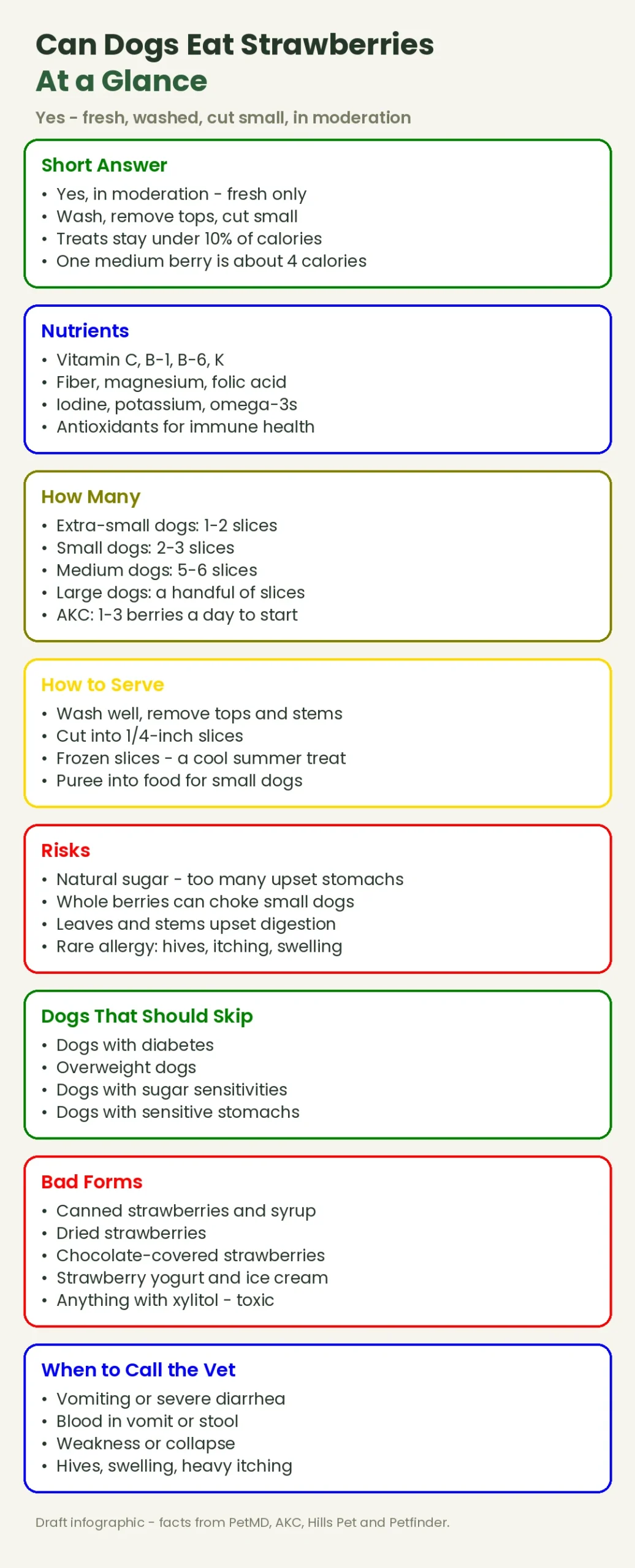
Yes, dogs can eat strawberries. Fresh strawberries are safe for most dogs when you serve them in small amounts, washed, with the tops removed and the fruit cut into small pieces. Strawberries bring fiber, vitamin C and antioxidants, and they carry less sugar than many other fruits. Treats — strawberries included — should stay under 10% of your dog’s daily calories.
Are Strawberries Good for Dogs?
Yes. Strawberries give your dog a sweet, low-calorie treat with real nutrients. PetMD lists vitamin C, vitamin B-1, vitamin B-6, vitamin K, magnesium, folic acid, fiber, iodine, potassium and omega-3 fatty acids in strawberries. Together, these nutrients support immune function, digestive health, and skin and coat condition. Hills Pet calls strawberries one of the better fruits to offer a dog because they run lower in sugar and calories than many fruits. The AKC adds one more perk: strawberries can help whiten your dog’s teeth.
A strawberry is not a meal and never replaces balanced dog food. It works as an occasional treat — a few slices after a walk, a frozen piece on a hot day, or a spoonful of puree mixed into dinner.
How Many Strawberries Can Dogs Eat?
Feed strawberries in moderation and size the portion to your dog. Counts vary, so here are three guides side by side:
All three sources agree on the rule behind the numbers: treats should make up no more than 10% of your dog’s daily calorie intake, and the other 90% should come from a complete and balanced dog food. Petfinder notes that one medium strawberry (12 grams) has about 4 calories (source: Purina, USDA), so a few berries add very little to the daily total — the sugar, not the calories, is what you watch.
How to Feed Strawberries to Dogs Safely

Wash strawberries, remove the green tops, and slice them small before serving.
Follow four steps every time:
- Wash the strawberries. Rinse them well to remove dirt, residue and pesticides.
- Remove the tops, stems and leaves. The green parts are not toxic, but they are hard to digest and can upset your dog’s stomach.
- Cut the fruit into small pieces. Slice berries about 1/4-inch thick. Small dogs need smaller pieces. Cutting removes the choking risk that whole berries carry, especially for small dogs and dogs that gulp food.
- Start small. Offer one or two pieces the first time and watch your dog for a day. If you see vomiting, diarrhea or itching, stop and call your vet.
Frozen strawberries are safe too, and they make a refreshing treat in warm weather. Cut them into slices first and let them soften slightly before you serve them. For a small dog, mash the berries or puree them and stir the puree into the dog’s food.
Ways to Serve Strawberries
Fresh slices are the simplest option. You can also try these:
Keep it simple. A plain fresh slice beats a fancy recipe with risky ingredients every time.
Risks to Watch For
Strawberries are safe for most dogs, but four risks matter:
Sugar. Strawberries contain natural sugar. Too many berries can upset your dog’s stomach and, over time, extra sugar can add to weight gain and dental problems. Dogs with diabetes or sugar sensitivities may need to skip strawberries entirely.
Digestive upset. Eating too many strawberries at once can cause vomiting, diarrhea or stomach discomfort. The leaves and stems can do the same. If your dog raids a strawberry patch, limit access — a whole patch is far more than a treat portion.
Choking. Whole strawberries can block a small dog’s throat or gut, especially in dogs that gulp. Always cut the fruit up first.
Allergy. A strawberry allergy is rare, but it happens. Hills Pet lists the warning signs: hives or swelling, excessive scratching, watery eyes, vomiting or diarrhea. PetMD adds that some veterinary dermatologists believe strawberries may cross-react with environmental allergens such as pollen, grass or dust, so a dog with chronic itching or skin sensitivities needs closer watching when it first tries strawberries.
Which Dogs Should Skip Strawberries?
Check with your vet first if your dog has diabetes, is overweight, has a sugar sensitivity or a sensitive stomach. Hills Pet suggests swapping strawberries for a lower-calorie treat — watermelon, celery or green beans — for overweight dogs, and using treats made for diabetic dogs instead. The AKC gives the same advice for dogs with diabetes, weight problems or sensitive stomachs. A vet who knows your dog can give a personal answer.
Which Strawberries Are Bad for Dogs?
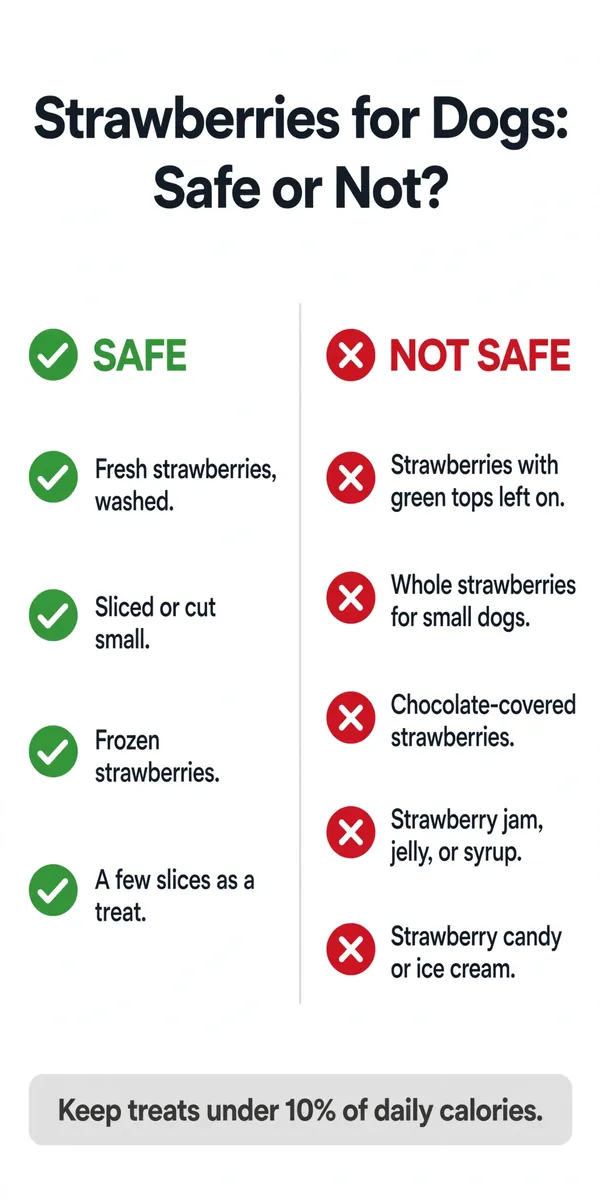
Fresh, plain strawberries are fine. These forms are not:
Read the label on anything strawberry-flavored. If you see xylitol (also listed as birch sugar), added sugar or a long list of sweeteners, keep it away from your dog.
Can Puppies Eat Strawberries?
Yes, once a puppy is fully weaned and eating solid food enthusiastically. Hills Pet and PetMD agree on this. Serve the same way — washed, tops removed, cut small — and keep the portion tiny. Treats should stay under 10% of a puppy’s daily food intake too. If your puppy has a sensitive stomach, ask your vet before offering any new food.
Can Dogs Eat Strawberries Every Day?
Most dogs can eat strawberries regularly in small amounts, as long as treats stay under 10% of daily calories. A small daily portion is fine for a healthy dog. Variety helps, though — rotate strawberries with other dog-safe treats instead of serving the same fruit every single day. If your dog starts showing soft stools or itching, cut back and talk to your vet.
When to Call the Vet
Call your vet if your dog shows any of these after eating strawberries:
PetMD lists these as reasons to seek veterinary care right away. Do not wait and see with blood, collapse or severe diarrhea — get help the same day.
Strawberries for Training and Enrichment
Frozen strawberry pieces work well as training incentives, Adopt-a-Pet notes — they are small, tasty and easy to carry. A frozen slice also keeps a dog busy on a hot day without adding many calories. PetMD suggests blending strawberries with dog-safe fruit and plain, sugar-free, xylitol-free yogurt, then freezing the mix inside a KONG toy for enrichment. That turns a simple treat into a puzzle that keeps a bored dog occupied. Keep training treats tiny: a pea-sized piece of strawberry rewards the behavior just as well as a whole berry, and it keeps the daily treat total under the 10% rule.
Strawberries vs Other Dog-Safe Fruits
Strawberries are not the only fruit your dog can eat, and they are not the lowest-calorie option either. Hills Pet names watermelon, celery and green beans as lower-calorie swaps for overweight dogs — useful when strawberries feel too sugary for your dog’s diet. You can also blend strawberries with other dog-safe fruits, as PetMD suggests. The practical rule stays the same for every fruit: fresh, plain, cut small, in moderation, with the 10% treat rule. Rotate fruits so your dog gets variety instead of the same sugar every day.
FAQs
The Bottom Line
Fresh strawberries are a safe, healthy treat for most dogs when you wash them, remove the tops, cut them small and keep the portion modest. Skip canned, syrup-packed and sweetened strawberry products, watch for allergy signs the first time, and check with your vet if your dog has diabetes, weight problems or a sensitive stomach.